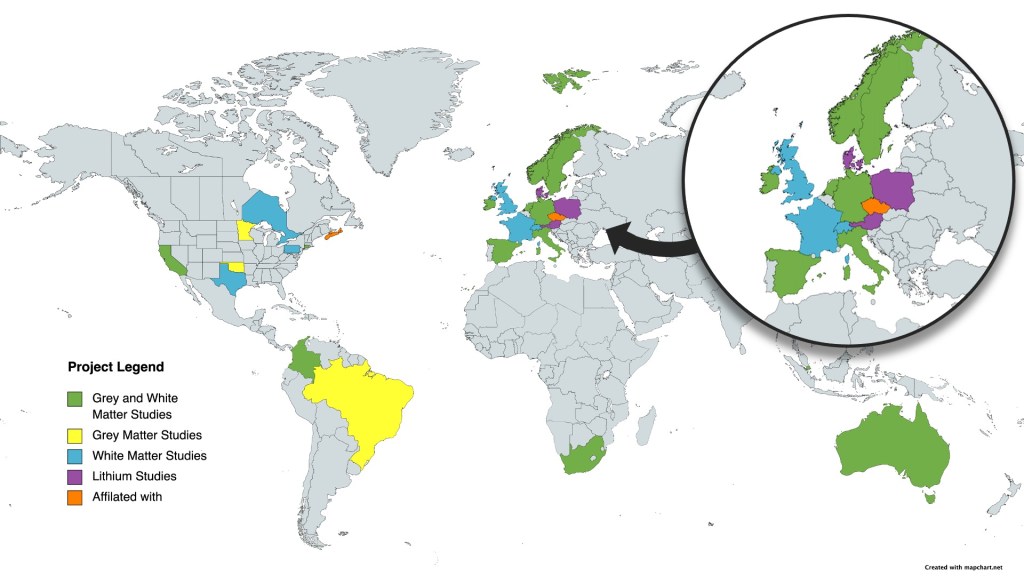
Collaborator Map
ENIGMA BMIx Working Group
We are interested in the interplay between obesity, major psychiatric disorders and the brain. Obesity is disproportionately frequent in people with psychiatric disorders, such as major depression, bipolar disorders and schizophrenia. This has a marked impact on physical health/mortality, but could also affect brain structure and related psychiatric outcomes. Replicated studies have documented associations between obesity and brain structure. Yet, we do not understand the links between obesity and the brain in major psychiatric disorders. Thus, the BMIX working group focuses on this interaction. We will also study the brain correlates of additional measures of metabolic/cardiovascular health; the role of obesitogenic psychiatric medications; incorporate genetic data and investigate the effects of low BMI.
The group is led by Tomas Hajek, Nils Opel, Scott Mackey and Jennifer Laurent.
Information from the website: https://enigma.ini.usc.edu/ongoing/enigma-bmix/

ENIGMA Bipolar Disorder Working Group
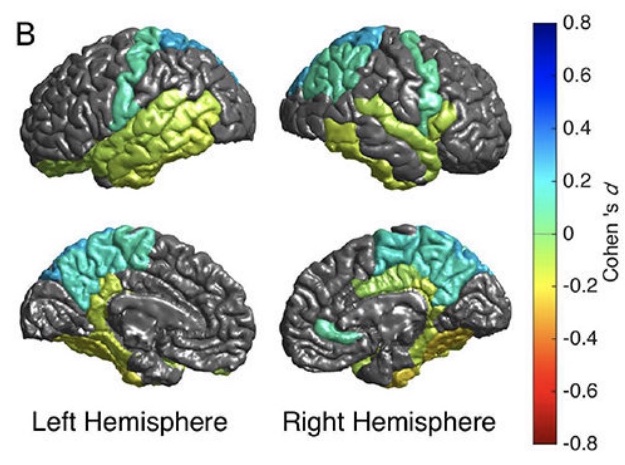
The ENIGMA Bipolar Disorder Working Group (ENIGMA-BD) was founded in the fall of 2012 and represents an international effort including over 200 clinicians, neuroscientists, bioengineers, and geneticists pooling data and resources to improve bipolar disorder nosology, diagnosis, targeted treatment, and patient outcomes. As part of the wider ENIGMA Consortium we aim to 1) improve efficient and consistent extraction of brain metrics for improved study replication, 2) standardize existing international bipolar disorder data sets to empower large-scale, ecologically valid studies, and 3) perform direct comparisons of brain and clinical measures across psychiatric disorders to better understand the common and distinct markers underlying mental illness on an unprecedented scale.
This group is led by the ENIGMA-BD chairs, Drs. Ole A. Andreassen and Christopher R. K. Ching.
Information from the website: https://enigma.ini.usc.edu/ongoing/enigma-bipolar-working-group/
ENIGMA Schizophrenia Working Group
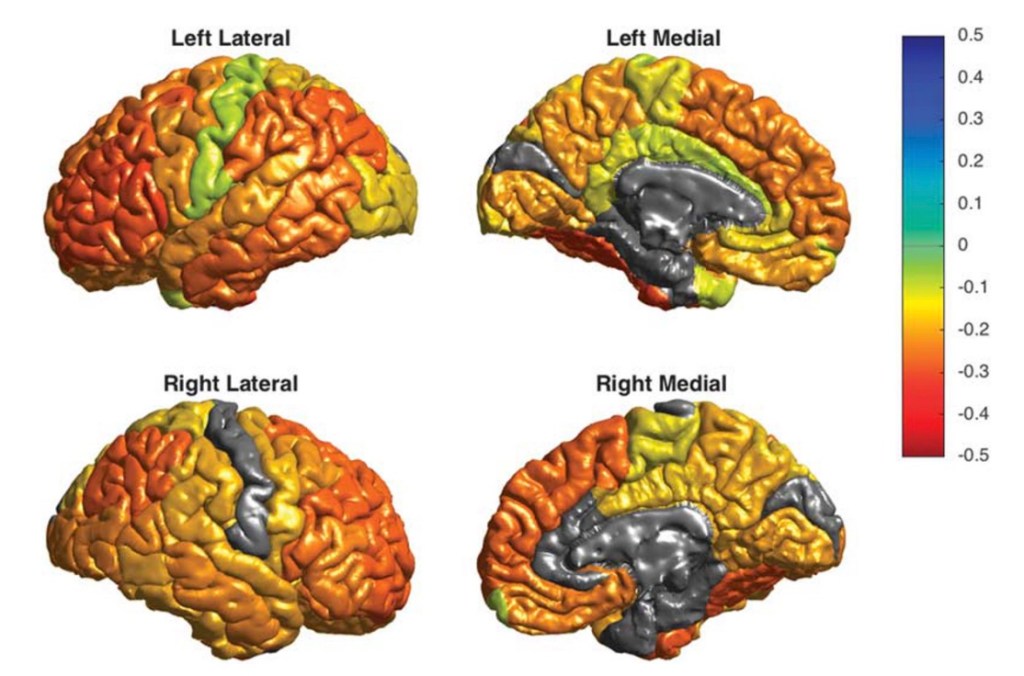
This working group has been formed to explore meta-analyses of cortical and subcortical structures across many different studies and datasets. Such data sets explore cannabis effects on structural measures, first episode and longitudinal studies, sibling/relation studies, early onset psychosis (EOP), and neuroimaging related to negative and positive symptoms.
This group is led by the ENIGMA co-chairs, Drs. Jessica Turner and Theo van Erp.
Information for the website: https://enigma.ini.usc.edu/ongoing/enigma-schizophrenia-working-group/
International Group for The Study of Lithium Treated Patients (IGSLi)
The main objectives of IGSLI are to conduct excellent, thorough, and innovative research, focusing primarily on affective disorders with particular emphasis on lithium. To be at the forefront of current developments in medical research and care in affective disorders, and to play an active role in the changes being made to patients with affective disorders. To facilitate the joining together of scientific data from the IGSLI member centers for the purpose of a joint analysis. To work in close cooperation with other research institutions and professional associations on an international level.
This group is led by Michael Bauer.
Information from the website: https://www.igsli.org/

 Hajek Lab