Here we describe our results for the public or study participants
Weight gain and antipsychotic medications – importance of initial weight
This study examined weight and physical-health changes during the first hospital admission for psychosis. It included 173 people experiencing a first episode of psychosis and followed them for an average of about six weeks.
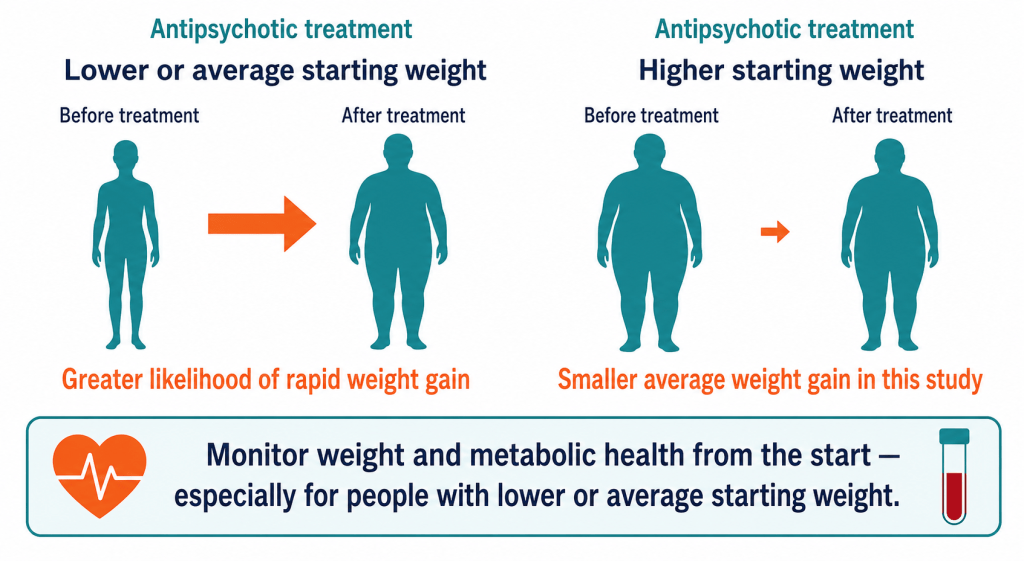
People gained an average of 3.5 kg (about 8 lb) during treatment. Weight gain was greater with longer treatment, higher medication doses, and medications known to have a higher likelihood of affecting weight, such as olanzapine, clozapine, and quetiapine.
The most important finding was that a person’s starting weight strongly influenced their risk of gaining weight. People who began treatment at a low or average weight gained more weight than those already in the overweight or obese range. This means that being thin or having an average body weight does not protect someone from medication-related weight gain. In fact, these individuals may need to pay particularly close attention when starting an antipsychotic medication, especially one with a higher risk of weight gain.
We also found that gaining weight was linked with early changes in cholesterol associated with future heart health risk, including higher triglycerides and lower “good” HDL cholesterol. These findings support regular weight checks and physical-health monitoring from the beginning of treatment, especially for people who start treatment at a lower or average weight. Antipsychotic medications can be vital for recovery, so any concerns about weight or side effects should be discussed with the treating team rather than result in stopping medication independently.
The study: Weight and metabolic changes in early psychosis-association with daily quantification of medication exposure during the first hospitalization is freely available at: https://onlinelibrary.wiley.com/doi/epdf/10.1111/acps.13594
Weight gain and brain changes in bipolar disorders
People with bipolar disorder are more likely than the general population to gain excess weight, and extra weight is known to affect not only the heart and blood vessels but also the brain. Earlier research has shown that obesity is linked with smaller brain volumes and difficulties with thinking and memory, and bipolar disorder itself can also be associated with similar changes. When bipolar disorder and obesity occur together, they may place even more strain on the brain.
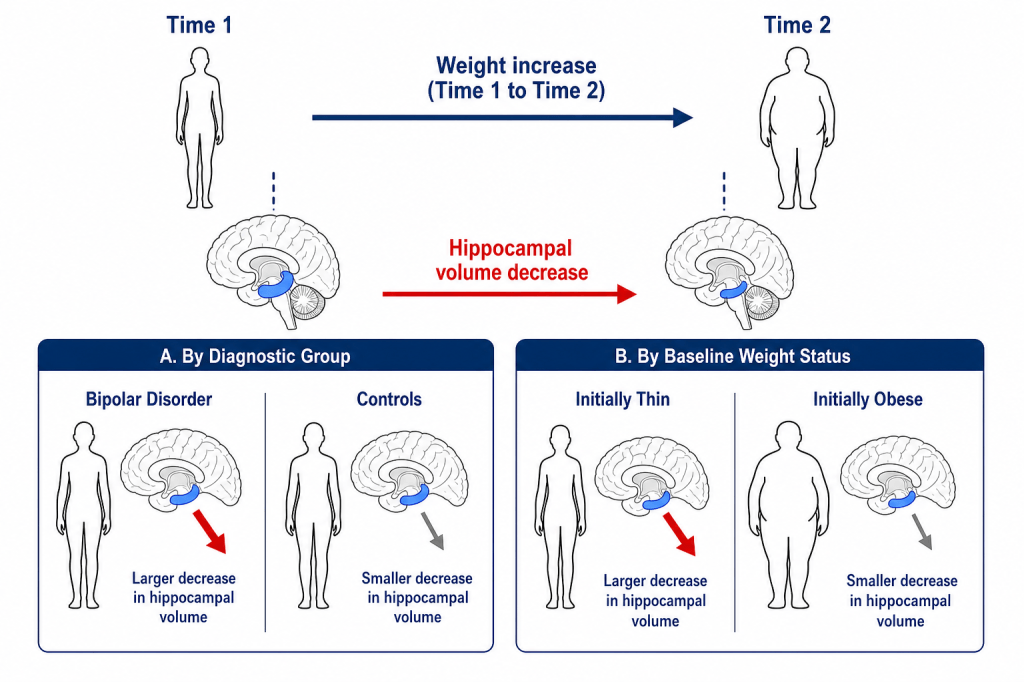
In this study, researchers wanted to understand how weight gain related to changes in a specific brain region called the hippocampus, which plays an important role in memory, learning, and managing stress. They followed people with bipolar disorder and people without bipolar disorder over several years. Everyone had their weight and height measured, and they had brain scans at least twice, so the researchers could see how both weight and the hippocampus changed over time.
The main finding was that in people with bipolar disorder, greater weight gain over time was linked to more shrinkage (loss of tissue) in the hippocampus. This relationship was stronger in people with bipolar disorder than in people without the disorder, suggesting that extra weight can add to the brain changes already seen in bipolar disorder. In addition, people with lower weight at the beginning of the study tended to gain more weight over time. This means that the greatest potential for loss of hippocampal volume was in bipolar patients who started out at a lower weight and then gained more weight during follow‑up.
These findings do not mean that having a normal or low weight is harmful. On the contrary, a healthy weight is good for both physical and brain health. However, in bipolar disorder, starting at a normal or low weight appears to be a risk factor for gaining weight later as a side effect of some medications. Because of this, clinicians should be especially cautious when prescribing medications that can cause weight gain to patients who are currently at a normal or low weight, and should monitor their weight particularly closely over time. For patients, an important message is that keeping an eye on weight and trying to prevent weight gain is good not only for the heart and blood vessels, but also for the brain and the part of it that helps with memory and mood.
The manuscript: The Link Between Weight Gain and Hippocampal Atrophy in Bipolar Disorder: A Longitudinal Investigation in 934 Participants, is freely available at: https://www.clinicalkey.com/#!/content/playContent/1-s2.0-S0006322326000624?returnurl=https:%2F%2Flinkinghub.elsevier.com%2Fretrieve%2Fpii%2FS0006322326000624%3Fshowall%3Dtrue&referrer=https:%2F%2Fpubmed.ncbi.nlm.nih.gov%2F
The role of metabolic health in neurostructural and cognitive alterations in bipolar disorders
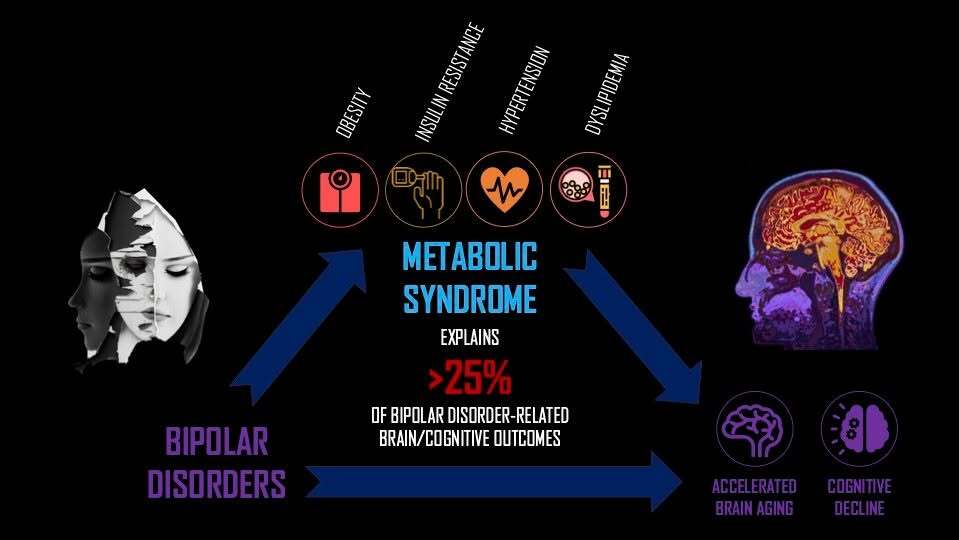
Bipolar disorder can affect more than mood. Many people also struggle with thinking skills such as memory, attention, and concentration, and these difficulties can make daily life harder. This study looked at whether poor metabolic health — things like obesity, high blood pressure, insulin resistance, and unhealthy cholesterol levels — might help explain some of those brain and thinking changes.
Our team studied 163 people, including 76 with bipolar disorder and 87 without it. We found that the group with bipolar disorder had worse metabolic health overall, and they also performed more poorly on memory tests and had brain scans that suggested faster brain aging. The important message is that not all of the brain and memory differences seen in bipolar disorder seem to be due to the illness itself. A substantial part appears to be related to poorer metabolic health, especially obesity and related risk factors.
The main takeaway is that good metabolic care may matter for brain health as well as physical health. For patients with bipolar disorder, monitoring weight, waist size, blood pressure, blood sugar, and cholesterol is not just about preventing heart disease or diabetes — it may also help track and protect memory and brain function.
The study: “The role of metabolic health in neurostructural and cognitive alterations in bipolar disorders” is freely available at: https://doi.org/10.1017/S0033291726104905